Friday, 17 January 2014

Filming Day 1 ( Completed filming)

Today was the day we filmed our thriller. The weather was nice and pleasant , the sky was dark and gloomy but it fit with the atmosphere we wanted to create in our films. We manages to finish all our filming because we started early. Everyone in the group worked together well. We were careful and precise when filming and we made sure we had enough footage.


Wednesday, 15 January 2014

Social Demographic/ Target Audience

Social Demographic

Social-demographic is a term used by the media industry used to categorize consumers by ‘social class’. Social-demographic is used by companies when deciding on the target social class to sell their product to.

A - Upper middle class
B - Middle class
C1 - Lower middle class

C2 - Skilled working class
D - Working class
E - Those at the lowest level of subsistence


Target Audience
When creating a product for an audience to consume it is vital to consider the target audience especially when it comes to advertising.When deciding on a target audience the things that need to be considered are:
 1) gender                                           
2) social class
3) age
4) location

Age


Stereo-typically  young people are most likely to use social network and to utilize modern technology however  recent studies have shows that the fastest growing demographic on twitter is the 55-64 age bracket. This demographic has grown 79% since 2012 . For Facebook it has grown by 56%. It is mow apparent that all age groups are influenced by social media and by technology.


Gender


Research shows that a lot of females watch psychological thrillers because they enjoy the story behind the events that take place in the movie  , it has also been shown females like the intellectual side of strange psychologically challenging behavior that features in psychological thrillers.


Action thrillers are dominated  by males who enjoy the intense action however some woman who might find the main (male) characters attractive  will watch , this can also happen if a male finds the female actress attractive.


Monday, 13 January 2014

Incorporating conventions

In order to make my thriller effective I plan to incorporate conversations of thrillers that I have retracted from popular thriller films.

These include:

  • Surprises and twists 
  • Quick cuts and change of camera angles 
  • Music to add tension 
  • Use of lighting to create shadows 
  • Camera angles from the villains point of view 

Shooting techniques

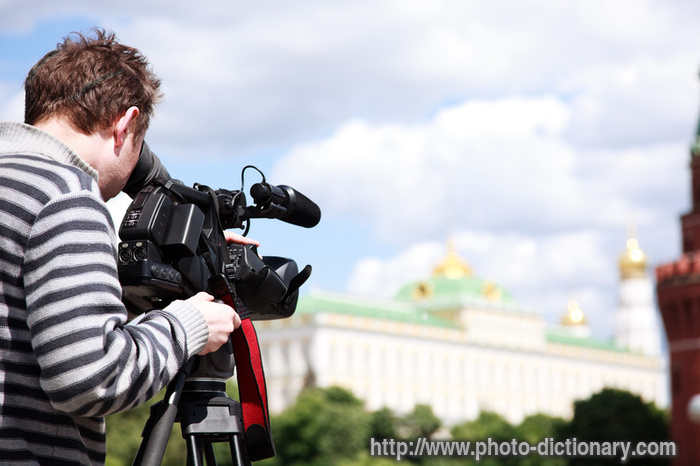
Position yourself and your camera. If you're using a tripod, make sure it's stable and level. If the tripod has a spirit level, check it. If you're going to be panning and/or tilting, make sure that you'll be comfortably positioned throughout the whole move. You don't want to start a pan, then realize you can't reach around far enough to get the end of it. If it's going to be difficult, you're better off finding the position which is most comfortable at the end of the move, so that you start in the more awkward position and become more comfortable as you complete the move. 
If you're not using a tripod, stabilize yourself and your camera as best you can. Keep your arms and elbows close to your body. Breathe steadily. For static shots, place your feet at shoulder width , or try bracing yourself against some solid object.
Frame your shot. Then do a quick mental check: white balance; focus; iris; framing (vertical and horizontal lines, background, etc. 
Think about your audio. Audio is just as important as vision, so don't forget about it.
Press record. Once you're recording, make sure that you are actually recording. There's no worse frustration than realizing that you were accidentally recording all the time you were setting the shot up, then stopped recording when you thought you were starting.

Use both eyes. A valuable skill is the ability to use one eye to look through the viewfinder, and the other eye to watch your surroundings. It takes a while to get used to it, but it means that you can walk around while shooting without tripping over, as well as keeping an eye out for where the action is happening. It's also easier on your eyes during long shoots.


Keep thinking about framing and audio. As long as you're recording, think about how the frame composition is changing, and what's happening to the sound.
Press "record stop" before moving. Just as in still photography, you should wait until one second after you've finished recording  before you move. Too many home videos end every shot with a jerky movement as the operator hits the stop button.
Be diplomatic while shooting. Think about the people you're shooting. Remember that people are often uncomfortable about being filmed, so try to be discreet and unobtrusive for example, you might want to position yourself some distance from the subjects and zoom in on them, rather than being in their faces.

Many people find the red recording light on the camera intimidating, and freeze whenever they see it. Try covering the light with a piece of tape to alleviate this problem.

Friday, 10 January 2014

Preliminary task evaluation

Our story was about two woman who meet under mysterious circumstances , after exchanging brief pleasantries we find out that they both have something that the other wants. The first woman wants the bag full of money and the other wants codes. However the woman is given fake codes and swears to kill the woman as she seems to be in a position of power.

We were able to use all the listed editing techniques. These include: Match on action  is when we see a character start an action on one sot and then see them continue it in the next. For example when Kamie walked through the door and we saw her opening it and then we cut to her walking through the door. An eyeline match is when we see the character looking at something off screen and then we cut to a shot of what they are looking at. For example when Kamie was looking at something and it then cut to a shot of the bird. The shot reverse shot when they show someone speaking over someones shoulder and then keep exchanging pov's we used this throughout the conversation. We also followed the 180 degree rule throughout the film.

We used the match on action shot convincingly however i believe with a bit more time we could have made the transition smoother. The shot reverse shots were used consistently in our film however at some points the camera positioning could have been much better.

In our film we were able to use every editing technique. Continuity was maintained throughout the whole film  and there are no noticeable blunders or mistakes. Our storyline wise tense and had an exciting ending.

However our film could have been much better had we had time to develop the storyline. It would have also been good if we could have incorporated a graphic match into it.

Most of the camera positioning were not as good as they could have been. And we didn't incoparate a range of shots.

Opening title sequence

The titles we are featuring in our opening sequence include:


  1. Ident- PRODUCTION COMPANY (Galaxy productions) 
  2. Presents a film by director (Ropafadzo Mugadza) 
  3. Male Actors (Chris Survilan , Max Wall) 
  4. Female Actress (Kamie Rothon) 
  5. Editor (Danny Hodge) 
  6. Music (Marry Lavon)
  7. Cinematography  (Jane Lauren) 
  8. Director (Ropafadzo Mugadza) 
  9. Title ( Hunter) 

Editing

Editing is the process in which editing is placed in a desired order.

Speed editing

The speed of editing consists how long does each shot last. In a film, all the scenes last a certain amount of time. It could last a matter of seconds or it could continue for minutes. The speed of editing gives the audience the impression of what mood is taking place on screen.Quick editing is used to make the audience feel suspense and anxiety. In order to do this the scenes and shots will change constantly and will last a few seconds at most.

Fast paced editing is used regularly in action trailers in order  to make the trailer exciting and to appeal to a certain demographic an example is die hard with a vengeance. 


Style Editing

Style of editing is how shots and scenes are linked together , the process of moving from one scene/shot to another is called a transition.

Types of  transitions

A straight cut is the most common transition used in film as it is invisible. One shot moves instantaneously to the next without attracting the audiences attention.  Straight cuts are used because they help retain reality. They do not break the views suspension of disbelief. Cuts can be done in a many different ways as the video bellow explains. 


A dissolve is when one shot is fading of the screen while another shot is fading in. This allows the audience to view both shots on the screen at the mid point of the dissolve. A good way to use a dissolve is often to link two significant characters or locations. 


A fade transition is a gradual darkening or lighting of an image that eventually becomes completely black/ white. A shot will fade until only a black or white screen can be seen, This is most popularly used to indicate the passing of time.


A wipe transition is when one image is pushed off the screen by another. The image can either be pushed to the left or to the right but it is more common for the image to be pushed off to the left as the movement is more consistent with the sense of time moving forward.


A jump cut is when the audiences attention is brought into focus on something very suddenly. This transition usually occurs by breaking the continuity editing  as it appears as if a section of the sequence has been removed.


A montage edit contains many different images/scenes quickly edited together but doesn't usually provide a sense of the narrative moving forward but can still be full of meaning. Montage editing is usually full of rapid cuts that force the audience to consider the connections between the images being shown.


Continuity editing 

Continuity editing is the process in which cutting is used to make a continuous narrative that generates the feeling that time is moving forward.


A graphic match is when the director places shots in a particular order to create a smooth visual transition from one frame to the next. When two consecutive shots are matched because of they're similarities a graphic match is created.


Match on action is when we see a character start an action in one shot from one point of view and continue it in the next shot from a different point of view. Match on action is used by directors  too manipulate the camera so it looks as if the film reality actually exists when not in view of the camera. For example, if a character happens to walk off screen in one shot, he must walk onto another screen in another shot. When one shot ends another picks up where the other left off making the reality of the film continuous and fluid. This is vital as it allows a change in scene without breaking the continuity.


An eyeliner match is when we see a character looking at something off screen and then it cuts to a shot of what they are looking at. 


A shot reverse shot is a common method of editing used to shoot dialogue. It is made up of repeated over the shoulder shots interrupted by the occasional medium two shot


The 180 degree  rule is a rule in cinematography that states that the angle between two consecutive shots should not exceed 180 degree to maintain spatial relationships between objects and people.


The 180 degree rule is sometimes broken to create effect , for example in this scene of the hunger games the director does it to emphasis on the size of the room and on how foreign everything seems to the protagonists.


Saturday, 4 January 2014

Die hard With A Vengeance


John McClane is now almost a full-blown alcoholic and is suspended from the NYPD. But when a bomb goes off in the Bonwit Teller Department Store the police go insane trying to figure out what's going on. Soon, a man named Simon calls and asks for McClane. Simon tells Inspector Walter Cobb that McClane is going to play a game called "Simon Says". He says that McClane is going to do the tasks he assigns him. If not, he'll blow off another bomb. With the help of a Harlem electrician, John McClane must race all over New York trying to figure out the frustrating puzzles that the crafty terrorist gives him. But when a bomb goes off in a subway station right by the Federal Reserve (the biggest gold storage in the world) things start to get heated up.